System Design Guide
The Ultimate Guide to Selecting the Right Garage Exhaust Removal System for Your Shop
It is critical for the safety and productivity of car dealerships, auto body shops, and repair garages to implement an effective garage exhaust removal system. Proper system design and installation help ensure exhaust fumes are removed correctly while extending the life of your exhaust hoses and related components.
Garage exhaust hoses are one of the most important aspects of an exhaust removal system. The most common option is a crushproof hose designed to provide a ground-based, out-the-door solution for repair facilities. While crushproof hoses are ideal for many rear, low-mount exhaust applications, overhead and under-floor systems may better match the needs of your specific shop.
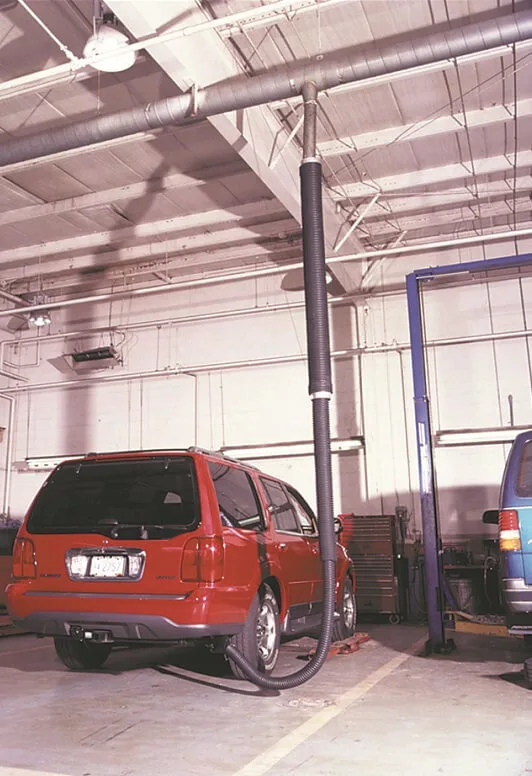
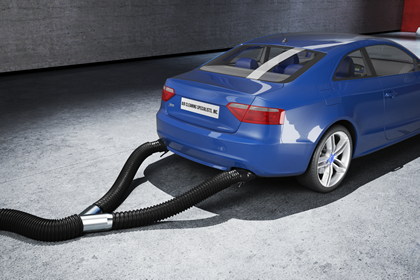
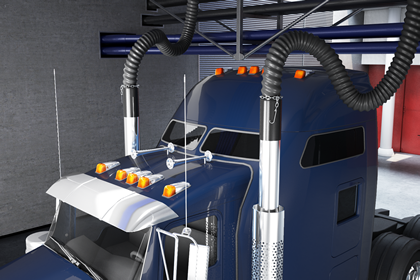
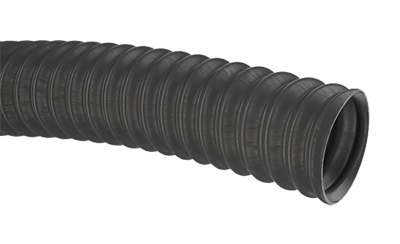
 WARNING: Vehicle Exhaust is extremely dangerous and potentially deadly. We always recommend that any system be properly engineered to meet the specifications of your application. If you are using our Crushproof system, we recommend that you use it with a fan and as an intermittent repair solution only, not to be run for long periods of time. This hose is to be used only with naturally aspirated 4 cycle engines running at an idle and under no load. We recommend keeping any run of hose as short as possible preferably 11' or under and sized to include ambient air to cool the exhaust temperatures. This hose is designed to handle frequent temperatures up to 400° and intermittent temperatures to 600°. When using Crushproof hose for the first time, watch closely to verify that the exhaust is exiting the building as designed. IF YOU SEE ANY EXHAUST COMING BACK INTO THE SPACE, THE HOSE IS NOT BEING USED PROPERLY. TURN THE VEHICLE OFF IMMEDIATELY AND CALL OUR EXPERTS.